041 001 0394Life St George's Hospital · Gqeberha, 6001Mon–Thu 08:00–17:00 · Fri 08:00–13:00
Services · Knee Replacement

Knee replacement surgery

Used to relieve pain and restore function when the knee joint has been significantly damaged, most commonly by osteoarthritis.

Knee replacement surgery is used to relieve pain and restore function when the knee joint has been significantly damaged, most commonly by osteoarthritis.

Not every patient with knee arthritis requires a total knee replacement. Depending on the pattern and extent of arthritis, some patients may be suitable for a partial knee replacement, while others are better treated with a total knee replacement.

The aim is to select the most appropriate operation for the individual patient while preserving normal knee function wherever possible.

Request an Appointment
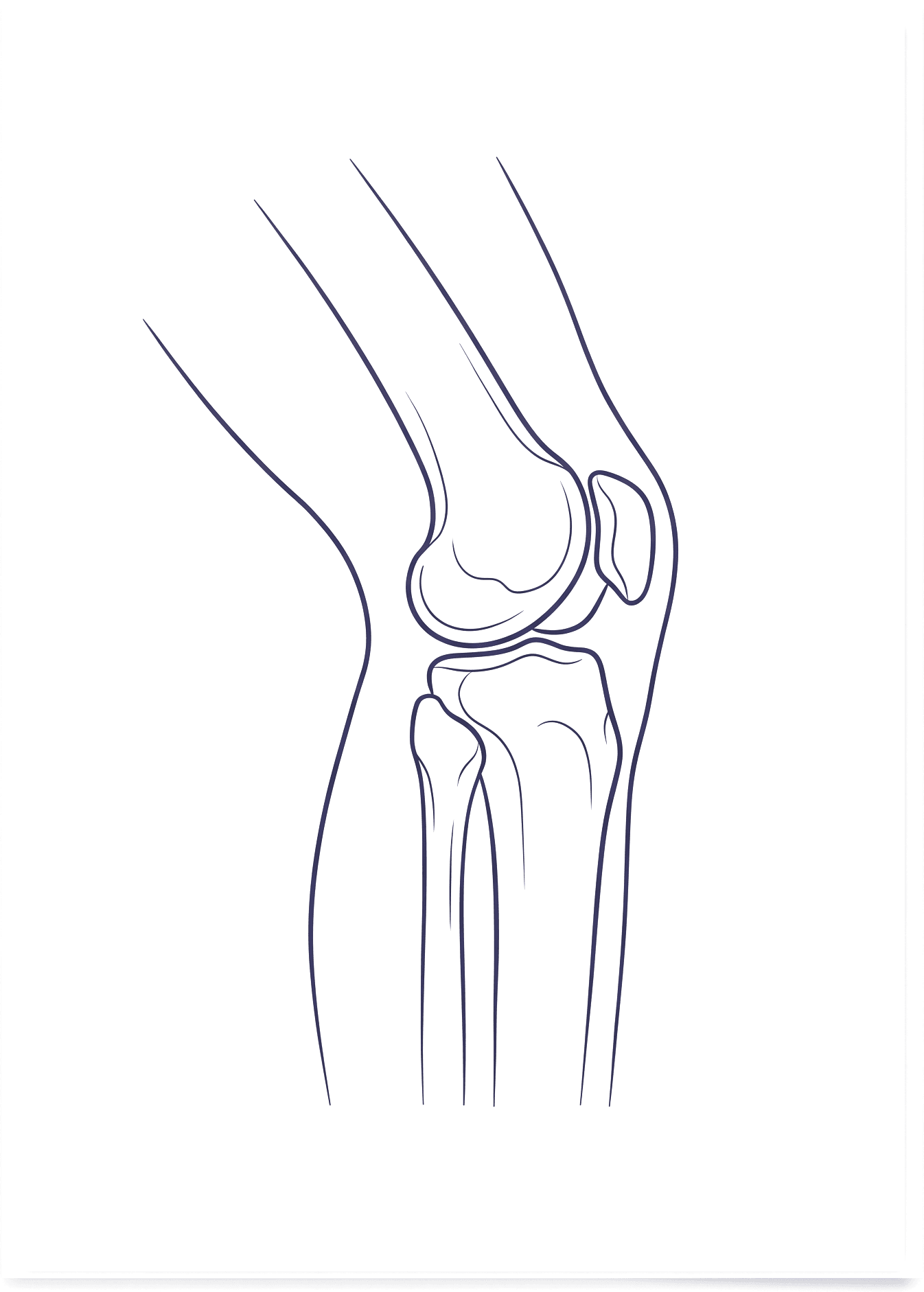
Knee replacement surgery: knee joint model at Dr Gerhard Pienaar's practice

When Is Knee Replacement Considered?

The most common reason for knee replacement is osteoarthritis, where the cartilage covering the surfaces of the knee gradually wears away.

Other conditions that may lead to knee replacement include:

  • Osteoarthritis
  • Inflammatory arthritis
  • Previous fractures or significant knee trauma
  • Previous ligament or meniscal injuries
  • Osteonecrosis
  • Significant knee deformity
  • Joint damage following previous surgery

Knee replacement is usually considered when pain and stiffness significantly affect walking, sleep, work, exercise or normal daily activities, and non-operative treatment is no longer providing adequate relief.

Understanding the Knee Joint

The knee can broadly be divided into three compartments:

  • Medial compartment – the inner side of the knee
  • Lateral compartment – the outer side of the knee
  • Patellofemoral compartment – between the kneecap and the femur

Arthritis may affect only one part of the knee or may involve several compartments.

The location and extent of arthritis are important when deciding between a partial and total knee replacement.

Partial Knee Replacement

A partial knee replacement, also called a unicompartmental knee replacement, replaces only the damaged compartment of the knee while preserving the healthy parts of the joint.

It is most commonly performed for arthritis isolated to the medial or lateral compartment.

Importantly, partial knee replacement is suitable only for appropriately selected patients.

Potential Advantages of Partial Knee Replacement

Because less of the knee is replaced, potential advantages include:

  • Preservation of more of the patient's natural knee
  • Preservation of important knee ligaments
  • Less bone removal
  • Smaller surgical exposure
  • Potentially less pain during early recovery
  • Faster early rehabilitation
  • A knee that may feel more natural during everyday activities

Who May Be Suitable?

Partial knee replacement may be considered when arthritis is predominantly confined to one compartment and the remaining knee is suitable for preservation.

The decision depends on several factors, including:

  • Location and severity of the arthritis
  • Condition of the other compartments
  • Knee stability and ligament function
  • Degree of deformity
  • Range of movement
  • Patient activity and expectations

If arthritis is more widespread, a total knee replacement is generally a more appropriate option.

Total Knee Replacement

A total knee replacement (TKR) is performed when arthritis affects multiple areas of the knee or when the pattern of disease makes a partial replacement unsuitable.

During surgery, the damaged surfaces at the end of the femur and top of the tibia are carefully prepared and resurfaced with metal components.

A highly durable polyethylene bearing is placed between these components, creating a new smooth surface for movement.

The kneecap is assessed during surgery and treated according to the individual condition of the patellofemoral joint.

Modern Total Knee Replacement

Modern knee replacement aims to do more than simply remove the arthritic surfaces.

Careful planning and surgical technique aim to restore:

  • Leg alignment
  • Knee stability
  • Joint-line position
  • Soft-tissue balance
  • Range of movement
  • Natural knee function

Different implant designs and fixation methods are available. Components may be cemented or uncemented, depending on factors such as bone quality, patient anatomy and the individual requirements of the operation.

Implant selection is therefore tailored to the individual patient.

Partial or Total Knee Replacement – Which Is Better?

Neither operation is automatically better.

The correct procedure depends primarily on the pattern and extent of arthritis.

When arthritis is genuinely isolated to one compartment, partial knee replacement can preserve more of the natural knee and may provide excellent function.

When arthritis involves several compartments, or when significant deformity or instability is present, total knee replacement provides a more comprehensive reconstruction.

The goal is therefore not simply to perform the smallest operation, but to perform the most appropriate replacement for that particular knee.

Recovery After Knee Replacement

Patients are usually encouraged to stand and begin walking soon after surgery, often on the day of surgery or the following morning.

Physiotherapy initially focuses on:

  • Safe walking
  • Regaining knee movement
  • Reducing swelling
  • Restoring muscle activation and strength
  • Gradually returning to normal daily activities

Recovery differs between patients.

Significant improvement usually occurs during the first 6–12 weeks, although strength, movement and function can continue to improve for many months.

Partial knee replacement may allow a faster early recovery in appropriately selected patients.

What Can I Expect?

In practical terms, a typical knee replacement involves:

  • A complete pre-operative workup that prepares you for knee replacement
  • One to two hours of surgery time
  • One to three nights in hospital, with physical therapy starting the day after surgery
  • A full pain management protocol, reducing your dependence on pain medication day by day
  • Return to basic daily activities within 2–3 weeks
  • Return to relatively normal activities by 2–3 months

Returning to an Active Lifestyle

The aim of knee replacement is to allow patients to return to a comfortable and active lifestyle.

Following appropriate rehabilitation, activities such as:

  • Walking and hiking
  • Cycling
  • Swimming
  • Golf
  • Gym and strength training
  • Low-impact recreational activities

are generally encouraged.

Higher-impact activities should be discussed individually.

How Long Does a Knee Replacement Last?

Modern knee replacements have excellent long-term survival.

How long an implant lasts depends on several factors, including the patient's age, activity level, weight, implant type, fixation, alignment and the underlying condition of the knee.

Modern knee replacements are designed to provide reliable function for many years, and many continue to function well beyond 15–20 years.

The Goal of Knee Replacement

The primary aim of knee replacement surgery is to relieve pain, restore mobility and improve quality of life.

The operation should be tailored to the individual knee.

Where appropriate, a partial knee replacement can preserve healthy bone, ligaments and unaffected parts of the joint. Where arthritis is more extensive, a total knee replacement provides a comprehensive reconstruction of the damaged joint.

The ultimate goal is a stable, well-aligned and functional knee that allows the patient to return to an active lifestyle.

Get back to a knee that carries you

Whether your pain comes from an injury or a condition such as osteoarthritis, there are options to get you back to good health.

Request an Appointment
Knee Replacement Surgery Port Elizabeth | Partial & Total | Dr Gerhard Pienaar